


How Non Woven Fabric Is Manufactured – Step-by-Step Process
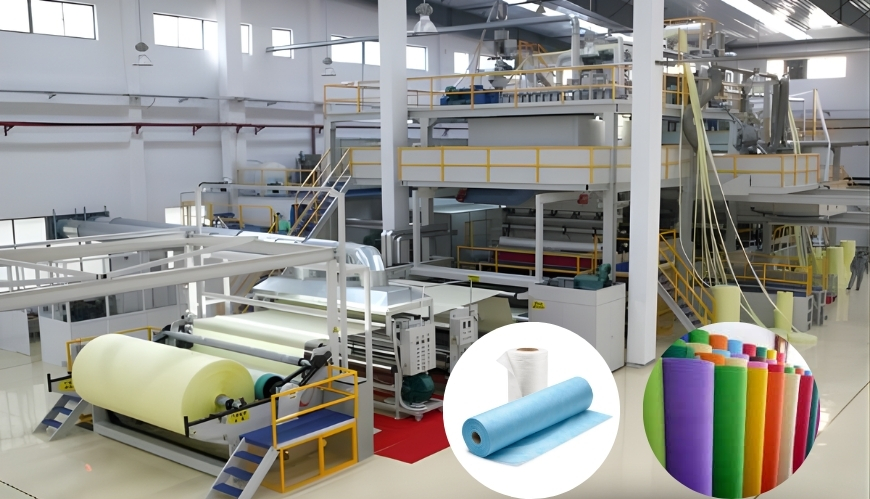
Non woven fabric is used across medical, hygiene, agriculture, packaging, and industrial sectors. Unlike conventional textiles, its performance depends largely on how it is manufactured, not how it is woven or knitted. Understanding the non woven fabric manufacturing process helps buyers, engineers, and decision-makers evaluate quality, suitability, and consistency before sourcing the material.
This guide explains the entire manufacturing journey from raw material to finished fabric in a clear, step-by-step, factory-level manner.
What Is Non Woven Fabric and How Is It Different From Traditional Textiles?
Non woven fabric is a sheet or web structure made by bonding fibers together mechanically, thermally, or chemically, rather than weaving or knitting yarns. In Non Woven Fabric Manufacturers, fibers are directly processed and bonded without being converted into yarn, which fundamentally changes how the material is produced.
The key difference from traditional textiles lies in structure and production:
- Woven fabrics are made by interlacing yarns at right angles.
- Knitted fabrics are formed by looping yarns.
- Non woven fabrics are created by directly bonding fibers without converting them into yarn.
Because of this, non woven fabrics can be produced faster, with controlled properties such as GSM, strength, softness, breathability, and absorbency. The manufacturing method determines the final performance of the fabric.
Which Raw Materials Are Used in Non Woven Fabric Manufacturing and Why They Matter?
The choice of raw material directly affects durability, feel, application, and recyclability.
Common raw materials include:
- Polypropylene (PP): Most widely used due to low cost, chemical resistance, and versatility.
- Polyester: Offers higher strength and heat resistance.
- Viscose or rayon: Used where softness and absorbency are required.
- Additives and masterbatches: Added to improve UV resistance, color, hydrophilic or hydrophobic properties.
The purity, melt flow index, and consistency of these materials play a critical role in ensuring stable production and uniform fabric quality.
Complete Non Woven Fabric Manufacturing Process Explained Step by Step
The non woven fabric manufacturing process follows a controlled sequence to ensure consistent fiber formation and bonding.
Polymer Granules Preparation and Controlled Melting Process
Manufacturing begins with polymer granules, typically polypropylene. These granules are fed into an extruder, where they are heated to a specific temperature until they melt.
Why this step matters:
- Proper melting ensures uniform fiber formation.
- Temperature control prevents degradation or weak fibers.
- Consistent melt flow directly impacts fabric strength and GSM stability.
Fiber Formation and Web Creation in Non Woven Fabric Production
The molten polymer is forced through fine spinnerets to form continuous filaments or fibers. These fibers are then laid down randomly or directionally on a moving conveyor belt to create a web.
Why this step matters:
- Fiber diameter influences softness and filtration efficiency.
- Web uniformity affects tensile strength and appearance.
- Controlled fiber laydown ensures even weight distribution.
Bonding Methods Used to Strengthen Non Woven Fabric Structure
Once the web is formed, fibers must be bonded to give the fabric strength and integrity.
Common bonding methods include:
- Thermal bonding: Uses heat and pressure to fuse fibers.
- Chemical bonding: Uses binders to hold fibers together.
- Mechanical bonding: Uses needles or water jets to entangle fibers.
The bonding method selected defines the fabric’s durability, flexibility, and end-use suitability.
Different Non Woven Fabric Manufacturing Technologies Used by Modern Manufacturers
Different technologies exist to meet specific performance requirements.
Spunbond Non Woven Fabric Manufacturing Process and Its Applications
In the spunbond process, molten polymer is extruded into continuous filaments, which are drawn, laid into a web, and thermally bonded.
Key characteristics:
- Medium to high strength
- Wide GSM range
- Good breathability and durability
Common applications include hygiene products, medical disposables, agriculture covers, and packaging materials. Spunbond non woven fabric is valued for its balance of strength and cost-efficiency.
Meltblown Non Woven Fabric Manufacturing Process for Filtration and Medical Use
Meltblown technology produces extremely fine fibers by blowing hot air onto molten polymer streams.
Key characteristics:
- Very fine fiber diameter
- High filtration efficiency
- Lower mechanical strength compared to spunbond
Meltblown non woven fabric is widely used in face masks, air and liquid filtration, and medical applications where particle capture is critical.
Spunlace (Hydroentanglement) Process for Soft and High-Strength Fabrics
The spunlace process uses high-pressure water jets to entangle fibers without heat or chemical binders.
Key characteristics:
- Soft, textile-like feel
- High strength and absorbency
- Lint-free surface
This method is commonly used for wet wipes, medical dressings, and personal care products.
Finishing, Treatment, and Customization Process in Non Woven Fabric Manufacturing
- Hydrophilic or hydrophobic treatment to control liquid absorption
- Antibacterial or anti-static treatments
- Lamination or coating for barrier properties
- Slitting and rewinding to customer-specified widths
Quality Control Measures Followed During Non Woven Fabric Manufacturing
- GSM and thickness measurement
- Tensile strength and elongation testing
- Air permeability and breathability tests
- Visual inspection for defects and uniformity
Understanding the Non Woven Fabric Manufacturing Process Before You Buy
Non woven fabric is not a single material but a result of controlled manufacturing science. Understanding how it is made helps buyers choose the right fabric for performance, compliance, and long-term reliability. A clear grasp of the process ensures better sourcing decisions and more consistent end products.
.png)

Mavazi Fab India